
Is Your Auto Repair Shop Ready for a Second Location?
A practical second-shop readiness test for auto repair owners: prove the first store can run without owner dispatch, build the management bench, separate location economics, and test the operating system before signing a lease.
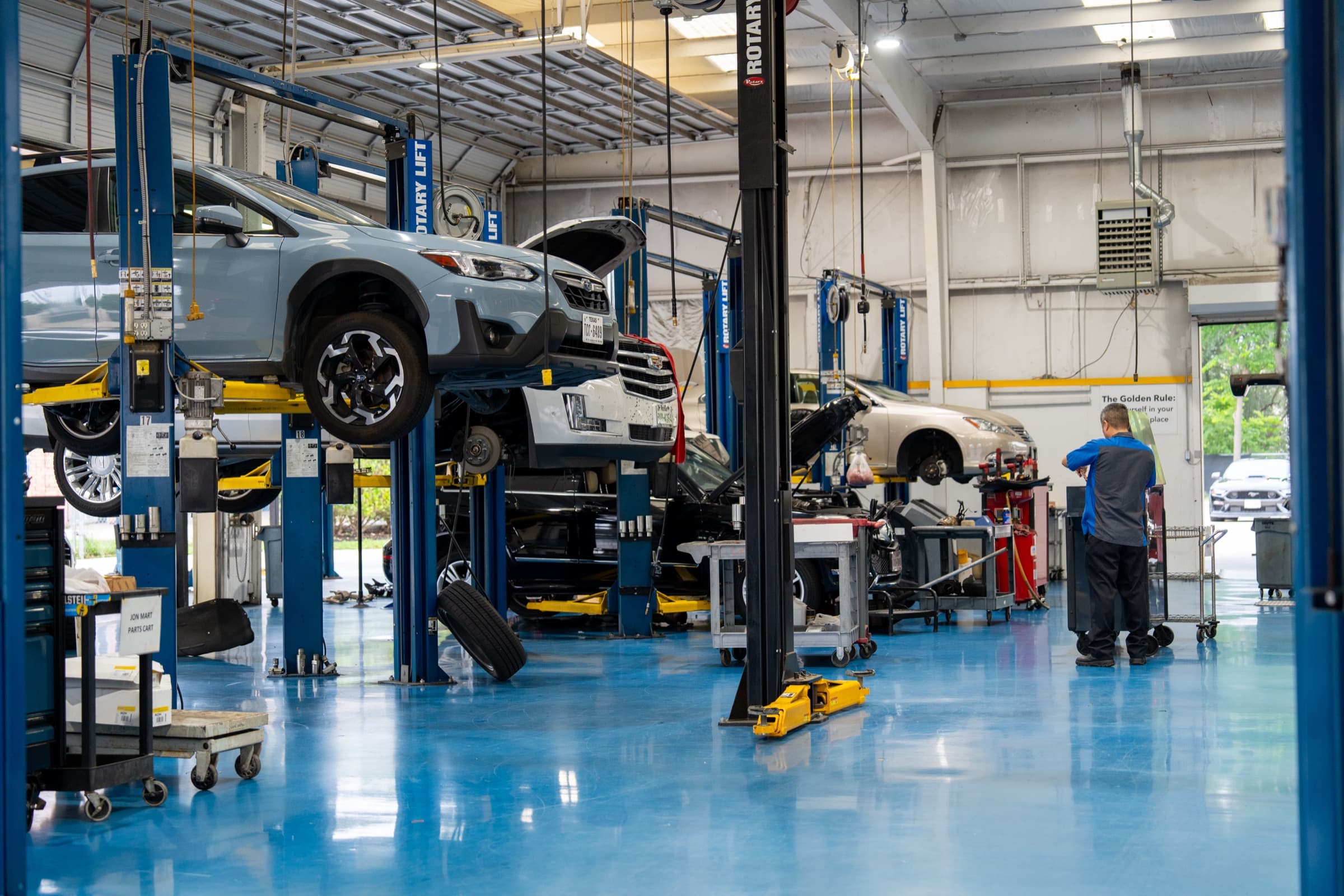
An auto repair shop is not ready for a second location just because the first one is busy. It is ready to be tested for expansion when Store 1 can hold its operating standard without the owner becoming the dispatcher for every exception.
A second address multiplies more than bays and car count. It multiplies handoffs, hiring pressure, manager decisions, financial reporting, quality-control exposure, and the distance between the owner and the work. If the first shop still runs on owner memory and owner rescue, the second location copies that dependency before adding a new one.
Public Master Tech to Millionaire conversations return to the same warning: store count can look like progress while a strong location quietly carries a weak one. The better expansion question is not, "Can we open another shop?" It is, "What evidence says our operating model will survive another shop?"
Start with the owner step-back test
Before searching for a building, run a bounded test inside the current business. For five normal business days, the owner stops acting as the default dispatcher. The owner can observe, attend the planned management cadence, and intervene for safety, legal, or material financial risk. Routine approvals, scheduling conflicts, customer escalations, parts issues, hiring decisions, and team coaching should follow the operating system.
Log every exception that still reaches the owner. Do not score the week by whether the team had a perfect five days. Score it by whether the shop exposed the real dependency clearly enough to fix it.
- What decision reached the owner?
- Who should have owned it?
- Was the standard missing, unclear, or ignored?
- What information was unavailable when the decision had to be made?
- Does the fix require a person, a process, a control, or a coaching conversation?
Every routine decision that still requires the owner at Store 1 is likely to become a recurring interruption across two locations.
1. Prove Store 1 can run through normal pressure
Owner independence does not mean the owner disappears from leadership. It means the business does not wait for the owner to route every car, approve every estimate exception, resolve every schedule change, or translate every number.
Look for evidence in normal operations: the manager runs the huddle, the advisor and technician handoffs follow a shared standard, quality control has an owner, customer escalations have a defined path, and the weekly scorecard produces decisions without a separate owner-built spreadsheet.
2. Build a management bench, not one heroic manager
A manager title is not enough. A second location needs leadership depth at both stores. If the only capable manager moves to Store 2, who develops the next advisor, handles an absence, reviews a miss, and protects the standard at Store 1?
- A named leader can run each store's daily operating cadence.
- At least one additional person is being developed for critical coverage.
- Managers can coach the standard instead of sending every miss back to the owner.
- Hiring starts before the opening creates emergency vacancies.
- The team knows which decisions stay at the store and which decisions escalate.
The podcast evidence is blunt about this constraint: multi-shop problems often become people problems because the owner can no longer spread personal attention across every location. Expansion readiness therefore includes the bench you have built, not only the leader you hope to hire.
3. Make the operating standard teachable
Store 2 should not require the owner to recreate the business from memory. The customer welcome, phone standard, inspection sequence, estimate handoff, bay flow, parts control, quality check, recruiting rhythm, huddle, and scorecard need to be visible enough for a manager to teach and inspect.
Documentation alone is not proof. A process is ready to scale when the team uses it during a busy day, a manager can identify an exception, and the shop has a defined way to correct the miss. The test is observable execution, not the existence of a binder.
4. Separate the economics before there are two stores
The first shop's historical performance does not automatically become the second shop's forecast. A new trade area, facility, team, equipment plan, opening schedule, and ramp create a different operating unit. Build a location-specific model and decide which assumptions will be reviewed before any commitment.
- Revenue, labor, parts, occupancy, marketing, and operating expenses can be reviewed by location.
- Pre-opening hiring, training, equipment, build-out, and ramp costs are visible rather than buried in Store 1.
- The owner can explain which resources Store 1 may share and for how long.
- A weak location cannot hide inside a combined company total.
- The business has a defined review cadence for actual results versus the location plan.
This article does not supply a universal revenue, profit, or cash-reserve threshold. Those decisions depend on the specific business, transaction, facility, and financing structure. The operating requirement is simpler: the assumptions must be explicit, the results must be separable, and the owner must be able to see when the first store is subsidizing the second.
5. Test controls at two-store distance
More locations create more distance between the owner and daily transactions. That increases the importance of permissions, approvals, timekeeping, refunds, purchasing, warranty handling, cash controls, and quality checks.
Use Store 1 to test whether the control works without owner presence. Can the manager see an exception quickly? Is there a review trail? Does the weekly meeting distinguish a process miss from a one-time event? If a control only works because the owner happens to notice something, it is not ready to scale.
6. Confirm demand without using busyness as proof
A full schedule can mean real unmet demand. It can also mean poor scheduling, a technician shortage, long cycle time, weak bay flow, or work that the current shop could serve with a better process. Separate those causes before deciding that another building is the answer.
- Which customers or vehicles cannot be served by the current capacity?
- Is the constraint bays, technicians, advisors, parts flow, schedule design, or market coverage?
- Does the proposed trade area add durable demand or divide the existing customer base?
- Could a process, staffing, or facility change at Store 1 solve the constraint first?
- What evidence will change the expansion decision?
The second-shop readiness scorecard
- Owner step-back: routine work moved through the team during the test.
- Management bench: each critical operating role has a leader and a development plan.
- Operating standard: managers can teach, observe, and correct the core handoffs.
- Location economics: Store 1 and the proposed Store 2 can be modeled and reviewed separately.
- Controls: permissions, approvals, quality checks, and exception review work without owner proximity.
- Demand: the capacity or market constraint is evidenced rather than assumed.
- Opening team: recruiting and training begin before the new location depends on emergency hiring.
Use green, yellow, and red based on evidence from your own shop. Green means the mechanism ran and produced a usable result. Yellow means it exists but still needs owner rescue or inconsistent follow-through. Red means the shop depends on an unwritten habit, one person, or information nobody can see.
There is no useful universal passing score. The purpose is to make the expansion backlog explicit. A red manager bench or invisible location economics deserves attention before a logo, lease, or opening date.
What to do with the results
Turn every yellow and red item into one assigned operating change. Define the owner, evidence of completion, and the next date the mechanism will be tested. Then run the owner step-back simulation again.
That is the central idea behind going slowly before going faster. The first store becomes the place where the team proves the standard, the scorecard, the bench, and the controls. The second store is then an expansion of something observable rather than a bet that the owner can work twice as hard.
Key2Key Courtside is advanced training for Key2Key alumni. Participants observe the customer and car handoffs, parts and warranty activity, scorecards, financial review, and multi-shop management cadence inside an operating Adams Automotive location.
Related reading
The next step is not more abstract advice. It is watching the operating vocabulary get used in a real workshop with owners who are working on the same problems.