
Owner Dependency Score: Does Your Auto Repair Shop Run Without You?
A practical way for repair shop owners to diagnose whether the business runs on a real operating system or still depends on the owner to carry the counter, the team, and the daily decisions.
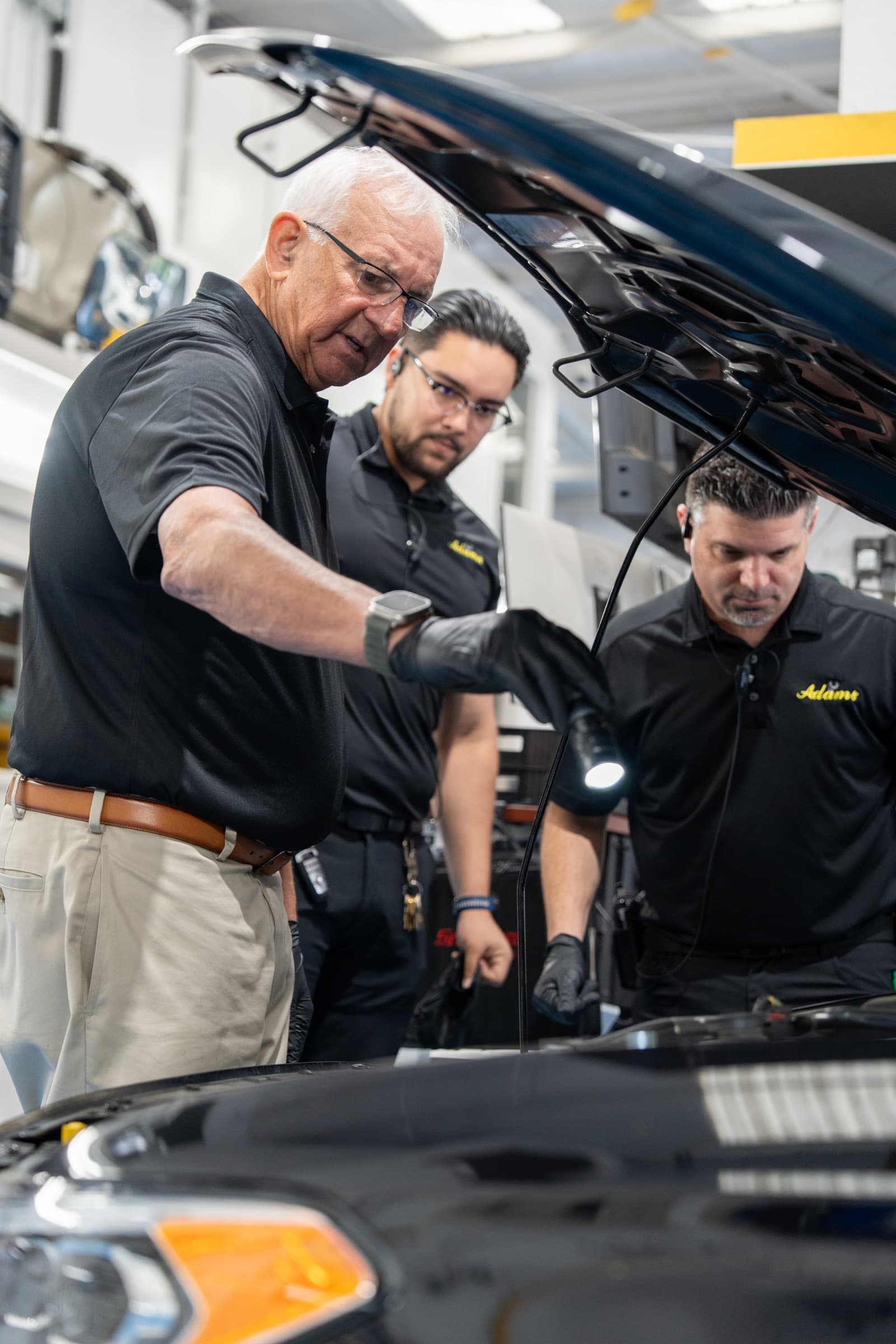
A busy shop can still be owner-dependent. The question is not only whether the shop makes money. The question is whether the business still works when the owner steps away from the counter, the schedule, the team, and the customer escalations.
That is the operating problem the Owner Dependency Score is meant to surface. It is not a promise that an owner can disappear from the business. It is a practical check on whether the shop has enough structure that the owner is not the only person holding the business together.
What owner dependency looks like
- The owner is still the final answer for too many customer decisions.
- Advisors know the owner can save the conversation, so the front-counter standard stays informal.
- Inspection recommendations change depending on who is working that day.
- Managers handle tasks, but not the operating rhythm.
- Recruiting starts only after the shop is already short-staffed.
- Financial review happens when something feels wrong, not on a steady cadence.
- Follow-up depends on memory, urgency, or the owner checking in.
Those problems usually do not show up as one clean failure. They show up as drag. The owner cannot take a real vacation. A second location feels harder than it should. The best advisor becomes the system. The team has good people, but the operating standard lives in the owner's head.
The seven areas to score
- Owner calendar dependency: how often the business stops or slows until the owner decides.
- Front-counter trust: whether customer confidence depends on the owner personally or on a trained advisor process.
- Inspection and recommendation sequence: whether the team has a repeatable way to inspect, prioritize, and explain work.
- Manager layer: whether a GM or lead manager owns the daily rhythm, not just the task list.
- Recruiting bench: whether hiring is a steady habit or a panic response.
- Financial cadence: whether the shop reviews margin, labor, sales, and net operating income consistently.
- Customer retention and callbacks: whether follow-up is system-owned instead of owner-memory-owned.
If the owner steps away for a week, does the shop run on standards or does everyone wait for the owner to come back?
Four owner-dependency bands
You do not need a perfect numeric score to learn something useful. Start by placing the shop in the band that feels most honest.
- Owner-carried: the shop works because the owner absorbs the gaps.
- Delegation-fragile: tasks are delegated, but pressure pulls everything back to the owner.
- Operator-led: the team has repeatable habits, but the manager layer may still be thin.
- Multi-shop-ready: the operating cadence is strong enough that expansion is a real conversation, not just owner ambition.
The point is not to shame the owner. Most good shops were built by owners who carried too much for too long. The point is to name where the system still depends on one person, then decide what to build next.
Where Key2Key fits
Key2Key Weekend is the clearest place to start when the owner-dependency problem is showing up at the front counter, in inspection sequencing, in recruiting rhythm, or in the basic operating vocabulary of the shop. The room connects those issues instead of treating them as separate fixes.
If your shop is still early and needs basic accountability, Key2Key may be ahead of where you are. If the shop already has volume, people, and pressure, but still depends heavily on the owner, the class is closer to the operating problem you are trying to solve.
The next step is not more abstract advice. It is seeing the operating model taught live with owners who are working on the same problem.
Related reading
The next step is not more abstract advice. It is watching the operating vocabulary get used in a real workshop with owners who are working on the same problems.